Pet Ophthalmology Care in Douglas, AZ
We diagnose and treat eye conditions in dogs and cats right here in Douglas. If your pet is squinting, tearing, or showing any change in their eyes, we can help.
Veterinary Ophthalmology Covers More Than You'd Expect
Eye Conditions We Diagnose and Treat in Dogs and Cats
Veterinary ophthalmology is the diagnosis and treatment of eye diseases and conditions in animals. At High Desert Veterinary Service, we evaluate dogs and cats for conditions including cataracts, corneal ulcers, conjunctivitis, glaucoma, dry eye, and eyelid abnormalities. If your pet shows any sign of eye discomfort or vision change, a timely exam can prevent permanent damage.
Watch for these signs in your pet: squinting or pawing at the eye, excessive tearing or discharge, cloudiness or any color change in the eye, a visible third eyelid, or sudden clumsiness that may point to vision loss. Most eye conditions move quickly. What looks minor on Monday can become serious by Wednesday. We include a basic eye check during routine wellness visits, but if you notice any of these symptoms between appointments, don't wait. Schedule a dedicated eye exam so we can get a closer look. Early treatment usually means simpler treatment, and protecting your pet's vision is worth the short drive in.
High Desert Veterinary Service Has Delivered Eye Care in Douglas Since 1986
Why In-Clinic Ophthalmology Matters for Rural Pet Owners
High Desert Veterinary Service provides veterinary ophthalmology for dogs and cats in Douglas, AZ, so pet owners in this region don't have to drive hours for a specialist. Founded in 1986 by Michael John and family-owned ever since, we've built more than 40 years of hands-on experience caring for the animals of Cochise County. We're USDA-accredited, which tells you we meet a standard that matters. For pet owners here in Douglas and the surrounding communities, having in-clinic eye care means faster answers and faster treatment. Delays in addressing eye conditions can lead to permanent vision loss. The nearest veterinary ophthalmology specialist can be a long drive away, and we know that's a real barrier for families in smaller communities. We work to close that gap. If your dog or cat needs an eye evaluation, we're here.
Eyes
Eye Conditions Common in Desert Southwest Dogs and Cats
Desert conditions create specific eye risks for pets. UV exposure, blowing dust, dry air, and rough outdoor terrain around Douglas put dogs and cats at higher risk for a range of eye problems. We see these conditions regularly and treat them at our clinic.
Corneal Ulcers and Eye Injuries
Dogs and cats that spend time outdoors in the Southwest can catch dust, sand, or plant material in the eye, leading to corneal scratches or ulcers. These can develop quickly and are painful. We examine and treat corneal conditions before they progress to deeper tissue damage.
Dry Eye (Keratoconjunctivitis Sicca)
Dry eye is a condition where the tear glands don't produce enough moisture, leaving the eye surface unprotected. It's more common in arid climates and in certain dog breeds. Left untreated, it can cause chronic irritation, corneal damage, and vision loss.
Cataracts and Lens Changes
Cataracts cause a visible cloudiness in the lens and can progress to significant vision loss. We identify cataracts during eye exams and advise owners on management options and what to watch for as the condition changes.
Conjunctivitis and Eyelid Abnormalities
Conjunctivitis — redness and discharge in the eye — can be caused by infection, allergies, or anatomical issues. Some breeds are prone to eyelid abnormalities that cause the lash or lid to contact the eye surface. Both are treatable when caught early.
Glaucoma
Glaucoma is a buildup of pressure inside the eye that can cause significant pain and rapid vision loss if not managed. It can develop on its own or as a secondary complication of another eye condition. Recognising signs early — a bulging or cloudy eye, pawing at the face — is critical.
FAQ
Four questions pet owners ask us most about eye care for dogs and cats.
Questions About Pet Eye Care in Douglas, AZ
What are the signs of eye problems in dogs and cats?
Signs include squinting, excessive tearing or discharge, cloudiness or a color change in the eye, redness, swelling around the eye socket, or your pet pawing at their face. Sudden clumsiness or bumping into things at low light can signal vision loss. If you notice any of these, call us promptly — eye conditions change fast.
Can cataracts in dogs be treated at a regular vet clinic?
We can diagnose cataracts during a thorough eye exam and advise you on what the condition means for your dog's vision and quality of life. Surgical correction requires a veterinary ophthalmology specialist, but we handle the monitoring, management, and referral process from our Douglas clinic so you have a clear next step.
How is a pet eye exam different from a regular wellness visit?
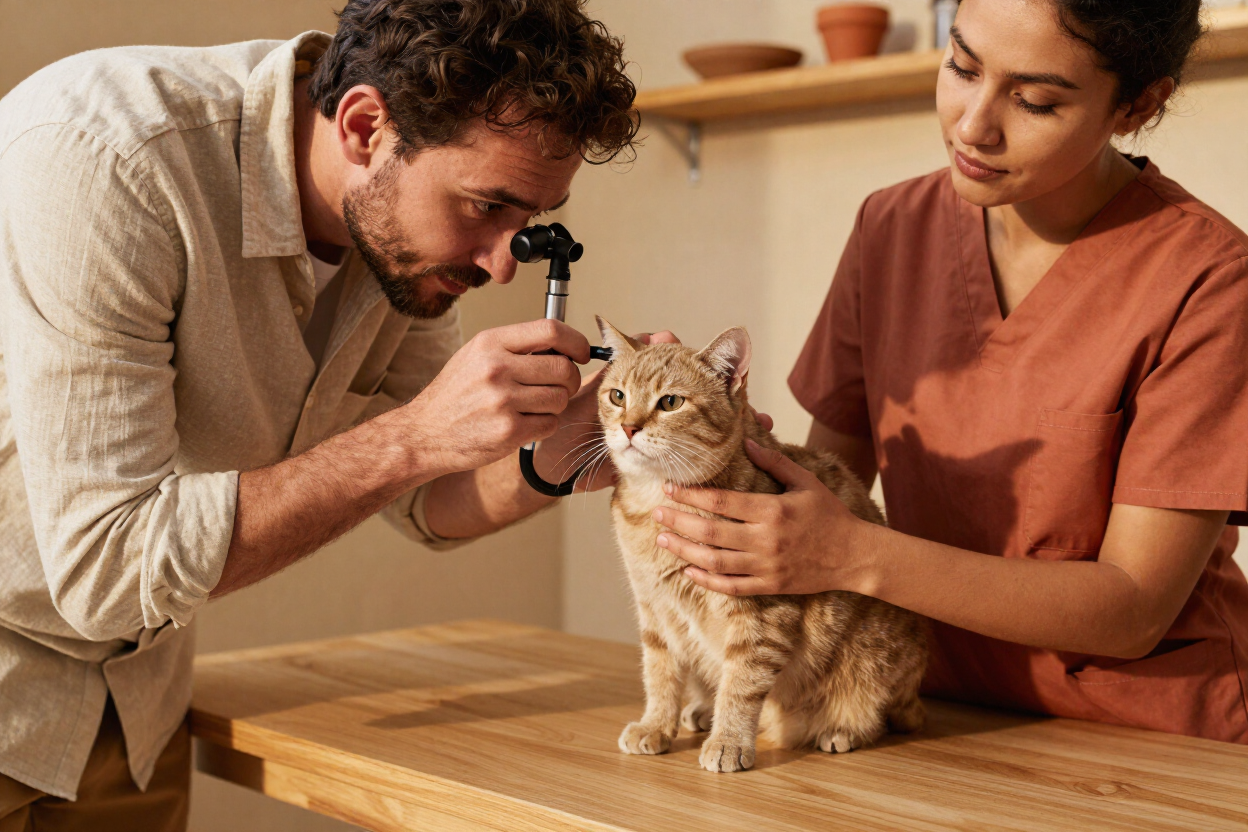
A standard wellness exam includes a basic visual check of the eyes as part of a full-body assessment. A dedicated eye exam goes further — we use instruments like an ophthalmoscope to evaluate internal eye structures, measure tear production, and check intraocular pressure. It's the difference between a general scan and a focused evaluation.
What does an ophthalmoscope do during a pet eye exam?
An ophthalmoscope is a handheld instrument that lets us see inside your pet's eye — the retina, optic nerve, lens, and blood vessels. It helps us identify conditions that aren't visible from the outside, like early retinal changes or pressure problems, without causing your pet any discomfort.
Your Pet's Eyes Deserve Prompt Attention
If your dog or cat is showing any sign of eye discomfort, don't wait to see if it clears up on its own. Most eye conditions are treatable when caught early, and a short call is all it takes to get started. We're here Monday through Friday, 8:30 AM to 5:30 PM, and limited emergency service is available 24/7.
High Desert Veterinary Service — 2555 E 9th St, Douglas, AZ 85607


